Chemistry
Credit to The Conversation for the image
Videos for this topic:
Chemistry Overview
Chemistry is the study of elements and their interactions. Everything is made of atoms, which have protons which have a positive charge, electrons (negative), and neutrons (neutral). The number of protons equals the number of electrons in a neutral atom.
Understanding the Periodic Table
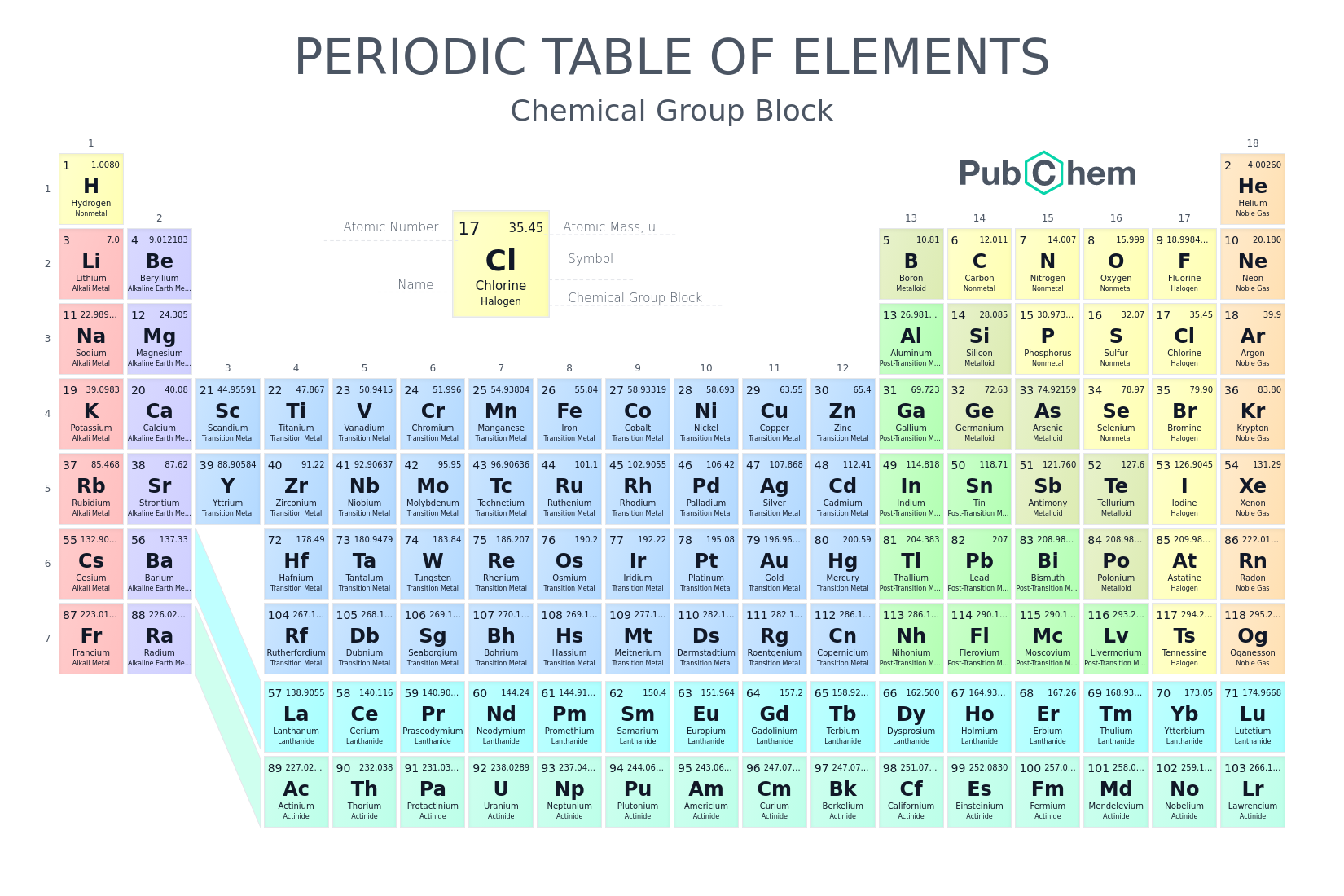
The periodic table organizes elements into groups (columns) and periods (rows):
- Groups: Elements in the same group have similar properties. They have the amount of valence electrons as the group number. Valence electrons are the number of electrons in the outer shell.
- Periods: Elements in the same period have the same number of electron shells.
Isotopes are variants of elements with different numbers of neutrons, often making them unstable and highly reactive.
Isomers are not even too related but I'll talk about them now. Basically, the chemical notation like H20 is good for telling us exactly what there is. Unfortunately, it can't tell us the arrangement. Isomers are a compound where the elements and numbers are the same but the arrangement is different.
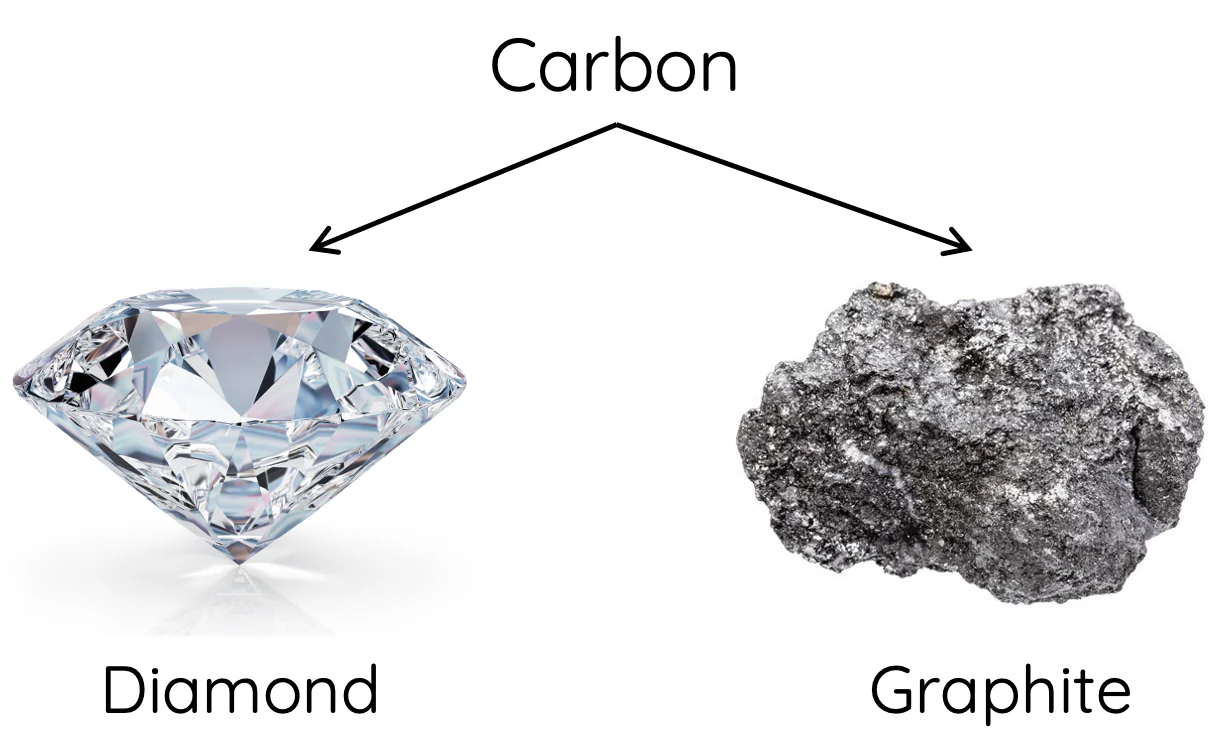
Oh, and by the way, Allotropes are the same element, but with a different structure, making them totally different. Graphite, is really the same as diamonds. It's just carbon.
Chemical Bonds
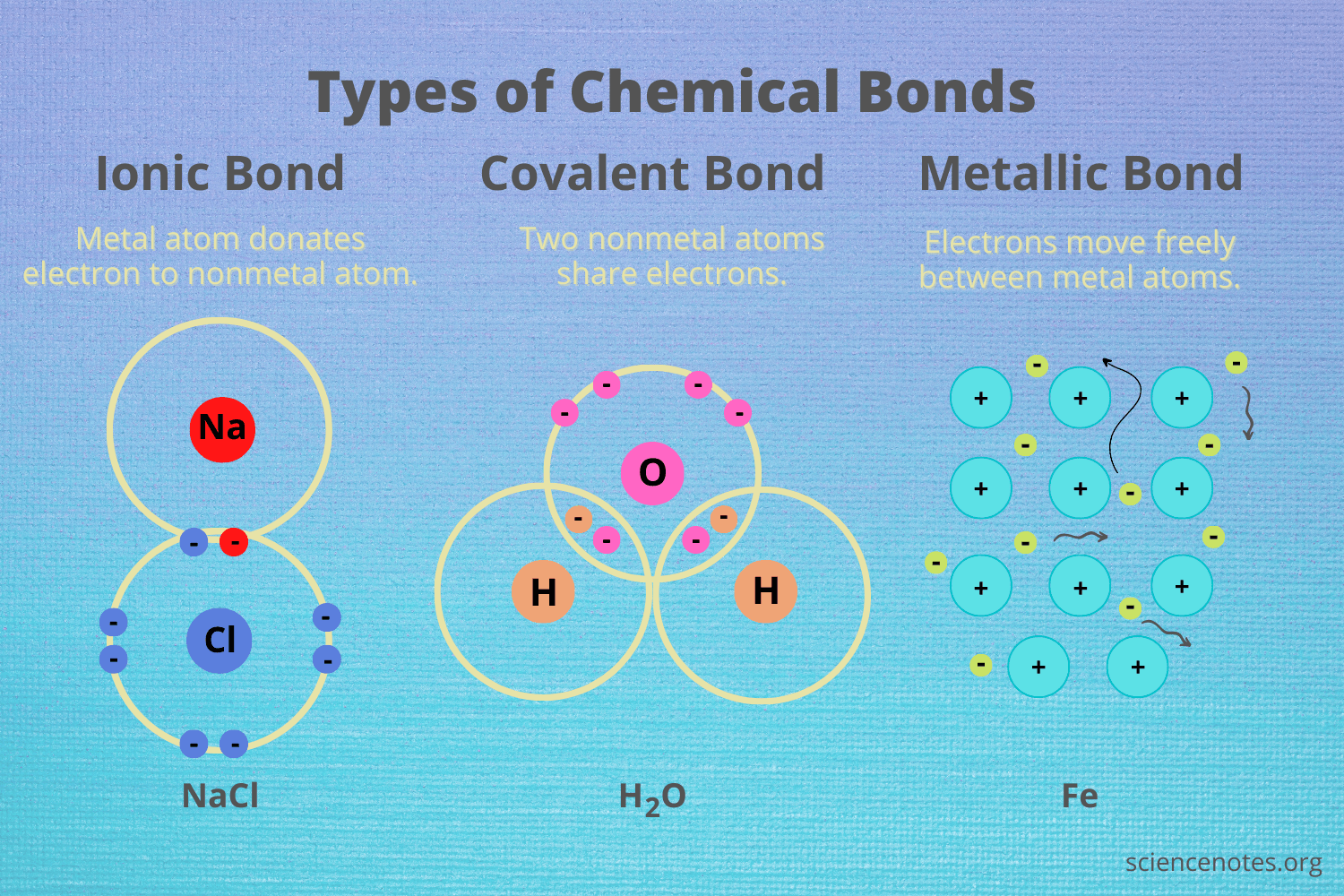
Chemical bonds hold atoms together. The main types are:
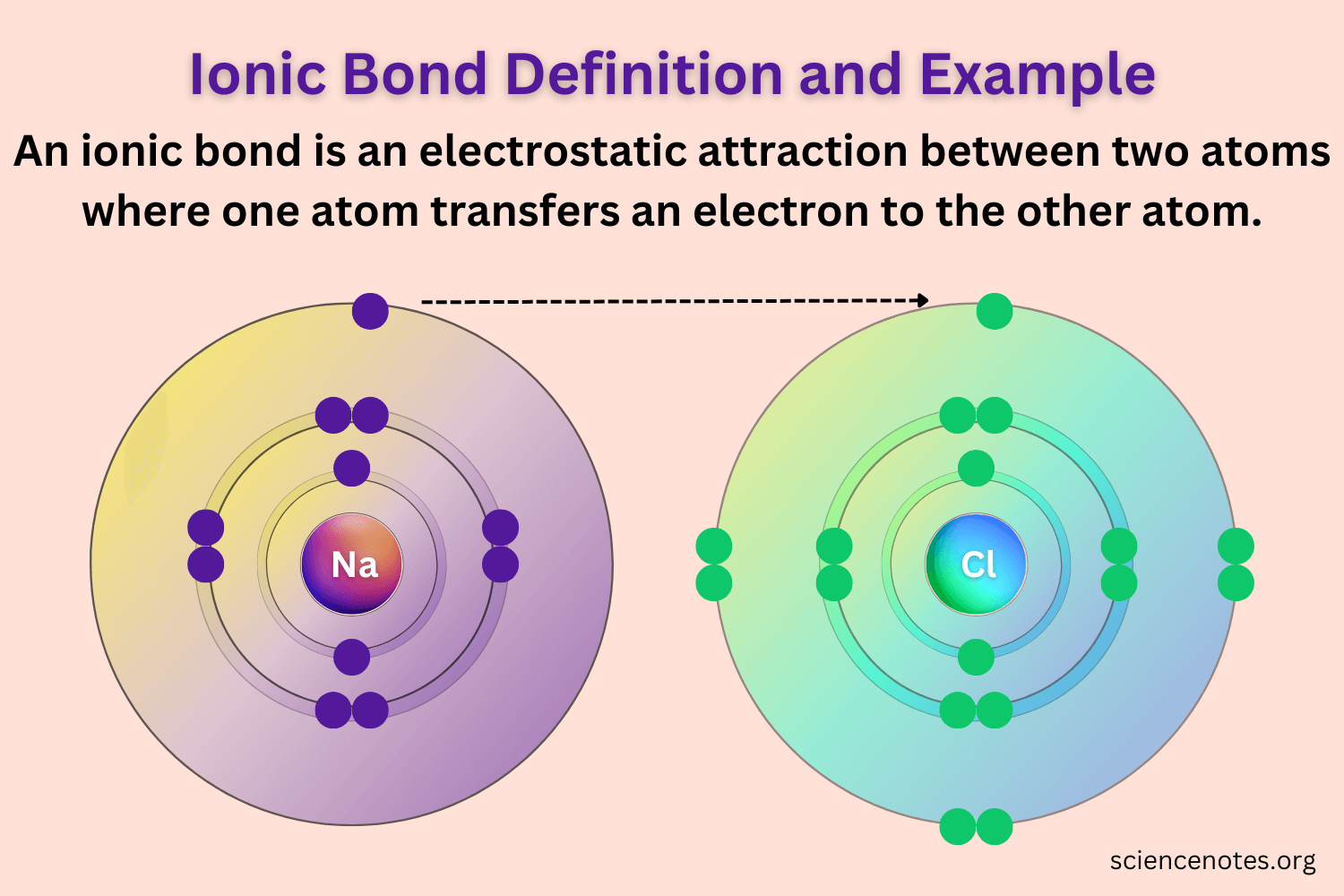
Ionic bond
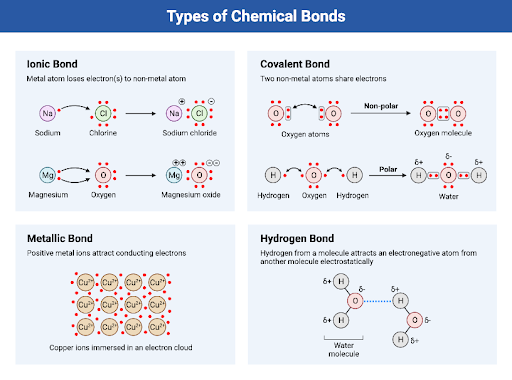
- Ionic Bonds: Form when one atom donates an electron to another, creating oppositely charged ions (cations: positive; anions: negative). For example, Sodium (Na) donates an electron to Chlorine (Cl), forming NaCl (table salt).
- Covalent Bonds: Occur when atoms share electrons. Polar covalent bonds involve unequal sharing (e.g., water, where Oxygen attracts Hydrogen's electrons). Non-polar covalent bonds involve equal sharing (e.g., O₂).
- Metallic Bonds: Found in metals, where electrons are shared in a "sea" of electrons, allowing conductivity and malleability.
Well how are these formed? As you probably know, protons tug on electrons like the positive/negative ends of a magnet. The strength of this tug is electronegativity. If you have an electronegativity greater than about 1.7, you get an Ionic bond (one electron gets donated), whereas if it's lower than 0.5 you get a Nonpolar covalent bond Which means that they have about equal pull and the electrons don't really belong to anyone.
The pH Scale
When water gains a proton, you get a Hydronium Ion (H+). (Which is an Ionic bond, refer to above). More acidic = higher concentration of hydronium ions.
Acids contain lots of hydronium ions, and they are the donors, meaning they donate a proton (H+) to bases. (H-) for acids. Alkalis are just soluble bases, like baking soda.
The pH scale measures acidity or basicity, ranging from 0 (most acidic) to 14 (most basic), with 7 being neutral. Below is a linear representation of the pH scale with examples:
Some substances are Amphoteric, which means that they can be both an acid and a base, like water. (Water is just better, it dissolves lots of stuff and can be an acid or base)
Some natural substances can be used as indicators to show pH level. I added baking soda to turmeric solution (I have no red cabbage) and it turns from yellow to a darker color, representing high pH. After adding lemon juice, it cancels and turns back to yellow, representing neutral pH.
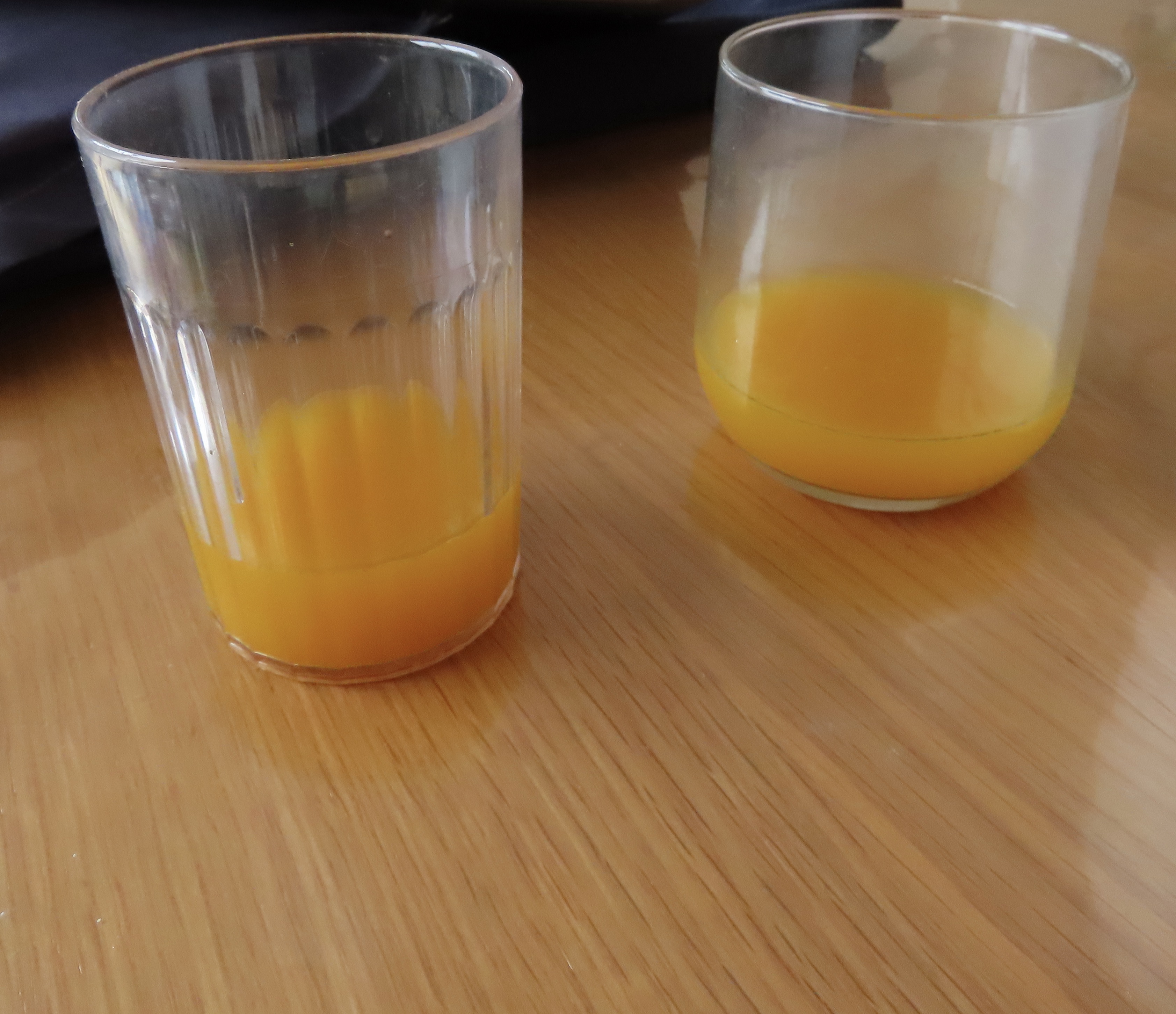
Turmeric solution
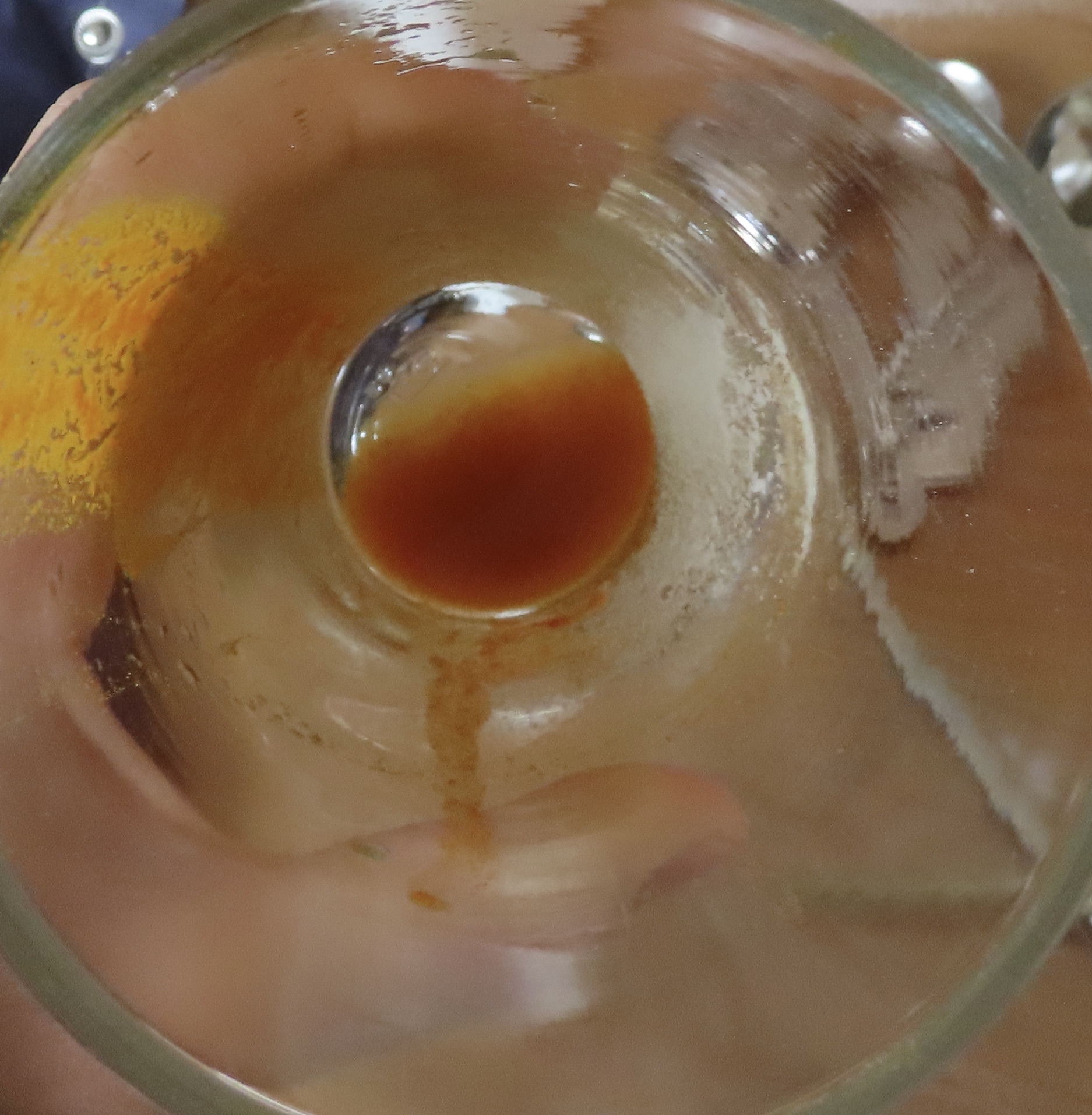
Baking soda added and solution darkens
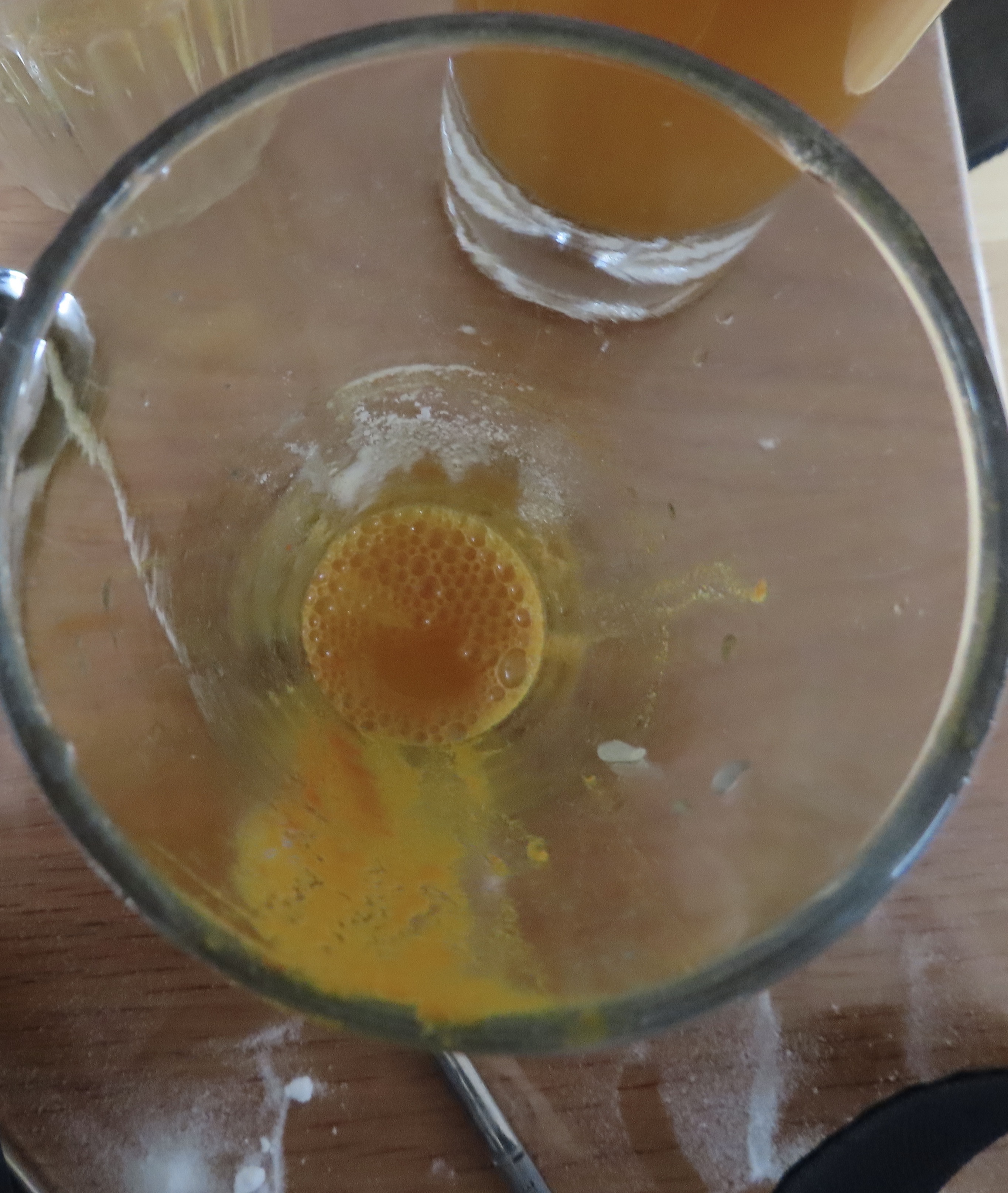
Lemon juice added and turns back
Acids: Substances with a pH below 7, such as battery acid (pH 0), stomach acid (pH 1-2), vinegar (pH 2-3), and lemon juice (pH 2-3).
Bases: Substances with a pH above 7, including alkalis (soluble bases) like baking soda (pH 9), ammonia (pH 11), and drain cleaner (pH 14). Bases neutralize acids.
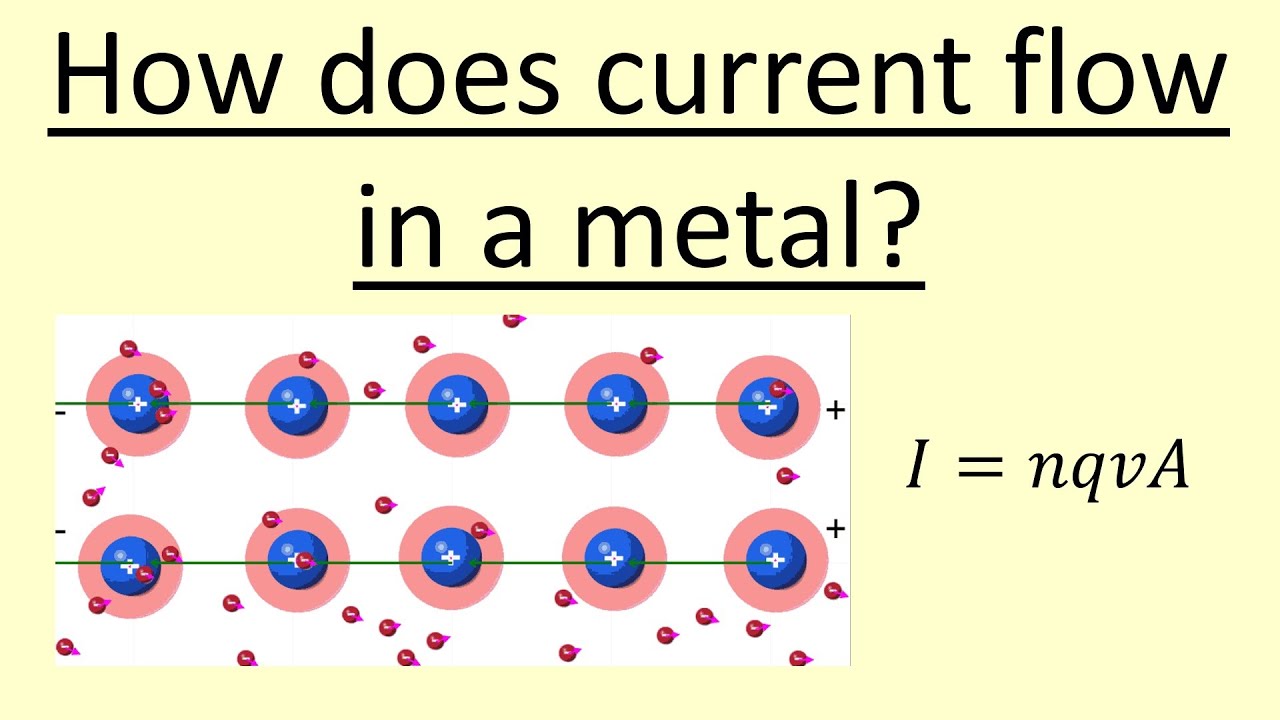
Metals have free flowing electrons in a rigid base of protons .This means that they can conduct electricity. Many electric vehicles (EVs) use metals like copper and silver for conducting electricity
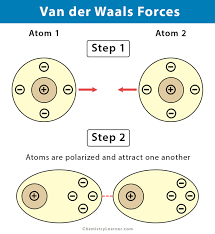
Oh and by the way, there's lots of inter atomic forces. My favorite is Van der Waals force. What happens is, when electrons, by chance, end up on one side of an atom, they influence electrons in other atoms to also become a Dipole. But then they keep moving and it is gone.
Entropy
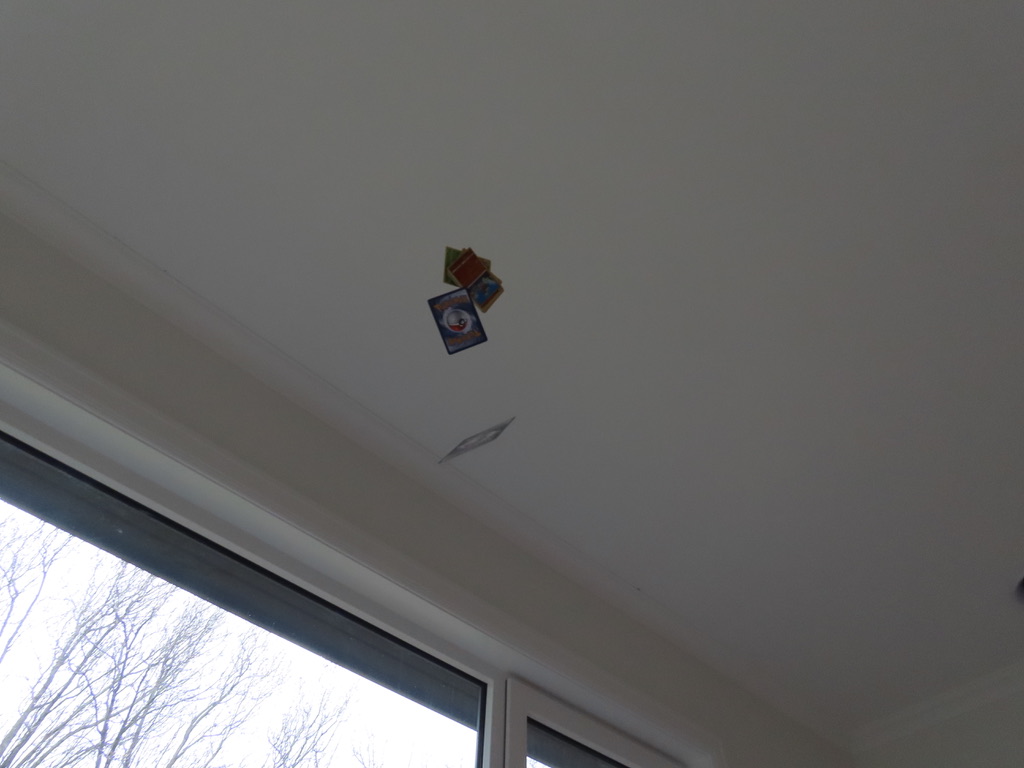
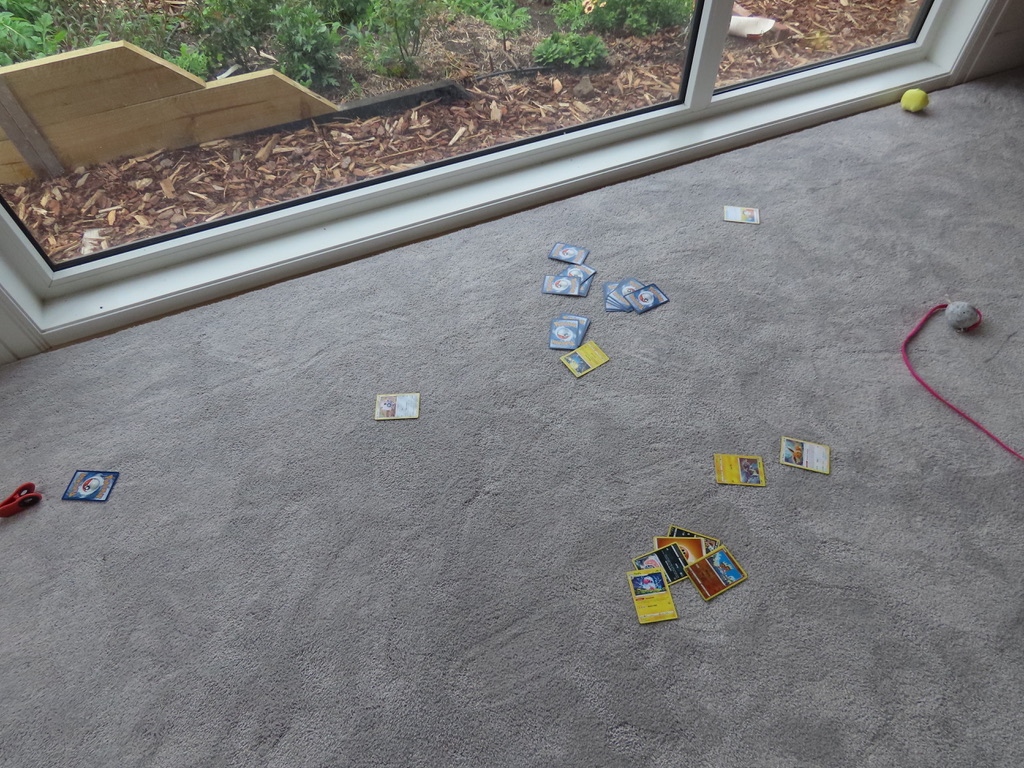
Entropy is the "messiness" of things. For example, in a solid, everything is arranged very neatly. This means that the solid has low entropy. However, a gas has things messily moving around everywhere. A gas has high entropy. An example of entropy can be seen with a deck of cards:
The cards are thrown into the air and land on the ground. The neat organised deck has a low entropy, while the messy pile has a high entropy. It takes more energy to go from a state of high to low entropy (put all the cards back together) than the other way (throw the cards in the air)
Chemical Bonding
Before you start to understand Chemical bonding, you will need to understand the structure and the components of an atom. An atom is made from the centre being a nucleus which is mostly made up of protons (upper / positive charge) and neurons (no charge). The outer layer is surrounded by tiny electrons that forms into clouds and orbits around the nucleus in shells. Chemical bonding is the force that holds the components of that of an atom, this creates a molecule further creating a compound. There are some types of Chemical bonds such as ionic bonds, where a bond is formed by the electrostatic interconnection between opposite ions. This happens when an atom transfers all its electrons to another. Covalent bonds is a chemical bond, that forms by the sharing of electron pairs between atoms to create a more stable and balanced electron configuration. Metallic bonds, which is where positive metallic ions are held together by a lot of delocalised electrons. Some weaker bonds between atoms and molecules include the hydrogen bond, where a strong attraction happens when a hydrogen atom bonds into an electronegative atom. A simple example of this is observed with nitrogen, fluorine and oxygen. These are all attracted to different or nearby electronegative molecules.